

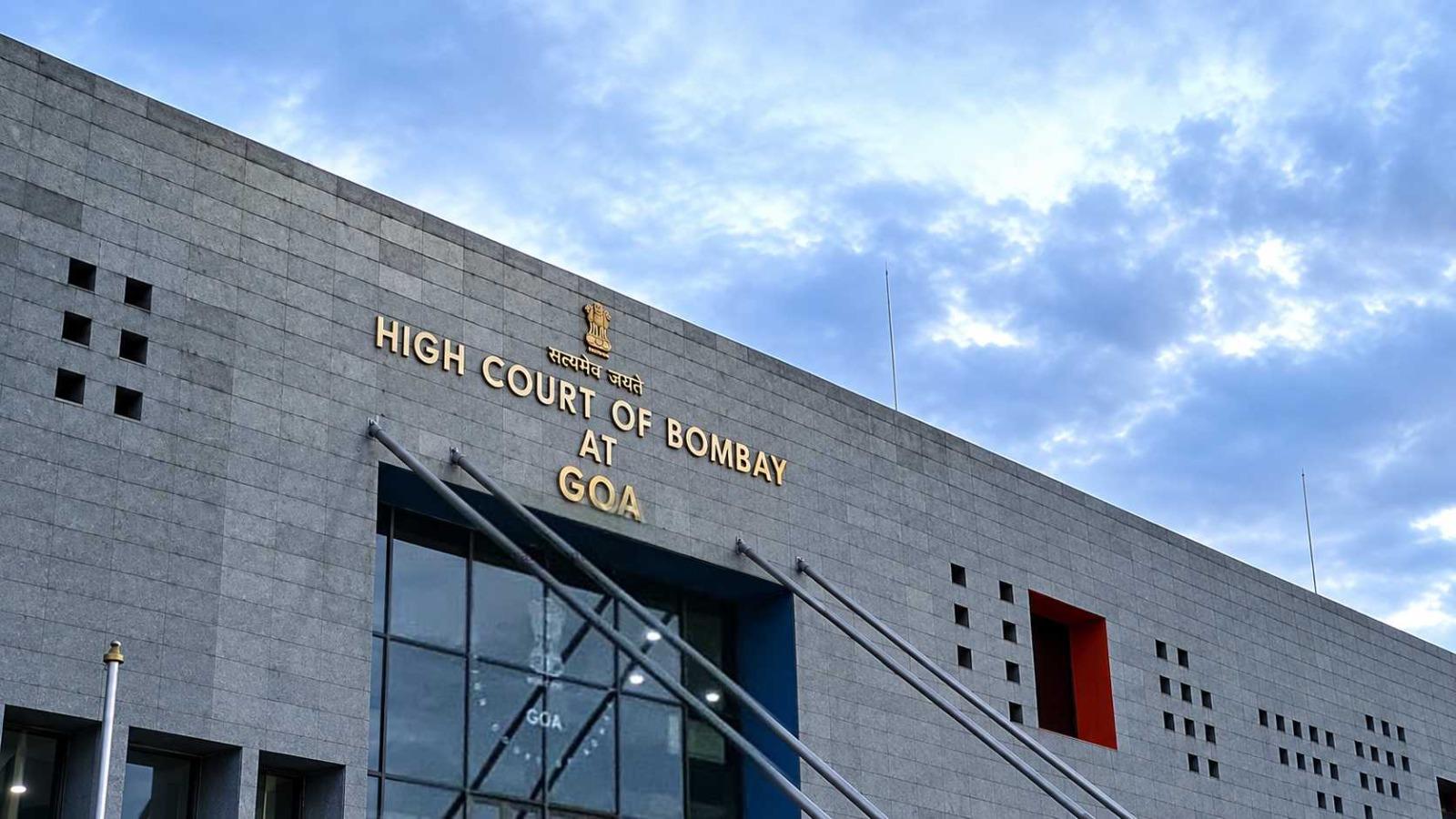
Panaji: The Goa Bench of the Bombay High Court on Tuesday reserved its verdict on a petition filed by a local resident who claimed that his name was deleted from the electoral roll during the Special Intensive Revision (SIR).
The division bench comprising Justice Valmiki Menezes and Justice Amit Jamsandekar heard arguments from Advocate Ashutosh Kumbhakoni, who argued that the absence of a voter’s name from the draft SIR roll does not automatically amount to deletion.
Six members of a family headed by Paresh Salgaonkar, residing in the St Cruz constituency in North Goa, filed a writ petition before the bench after their names were found missing from the electoral roll during the SIR.
Appearing on behalf of the Election Commission of India (ECI), Advocate Kumbhakoni said the SIR is a comprehensive, de novo exercise, as the “electoral roll undergoing intensive revision must be prepared afresh from the ground up.”
He said that, unlike a Special Summary Revision (SSR), which starts with the existing electoral roll and updates it, the SIR involves preparing the electoral roll afresh through an intensive revision process.
“Absence from the draft SIR roll does not automatically amount to deletion,” he argued, adding that since the electoral roll is being prepared afresh, a name missing from the draft roll has not technically been deleted from the newly prepared roll.
“The SSR updates the existing electoral roll based on information received through the prescribed procedure, while the SIR rebuilds the electoral roll through an intensive process based on the enumeration exercise,” he told the bench.
Advocate Kumbhakoni further argued that the absence of the petitioner’s name from the draft SIR roll should not automatically be described as deletion or removal.
He submitted that the petitioner had allegedly not lived at the address recorded in the pre-SIR electoral rolls for eight to ten years.
The ECI lawyer also contended that the petitioner had not applied to change his address before the SIR began and should have sought a change of address within the constituency before the revision exercise commenced.
“In fact, my lord, this case is a classical case which shows the effectiveness of SIR,” he said.
During the hearing, the bench said it had made clear from the outset that “there is no challenge to the SIR process.”
“The petitioner has not raised this challenge. Therefore, what we are here to understand is the process,” the judges said.
Advocate Rodrigues, representing the petitioner, said the enumeration exercise began on November 4, 2025, after which the Booth Level Officer (BLO) visited the petitioner’s old and new addresses on November 8, 2025.
He said that on November 12, 2025, the petitioner contacted the BLO and requested an enumeration form, but the officer refused to hand it over, stating that it had to be delivered to the address recorded in the electoral roll, which was the petitioner’s old address.
Advocate Rodrigues pointed out that the petitioner subsequently filled out Form 8 to change his address.
The ECI informed the petitioner on December 8, 2025, that his application for shifting his place of residence through Form 8 had been received. However, when the draft electoral roll was published on December 16, 2025, the petitioner’s name was missing, the lawyer said.
Rodrigues said the BLO informed the petitioner that the Form 8 application was still being processed and had not been rejected.
“On January 2, 2026, the petitioner received a message stating that a BLO had been assigned for the purpose, and on January 10, the ECI confirmed that field verification had been completed,” the lawyer told the court.
He further submitted that on January 17, the petitioner received a letter from the ECI stating that his application had been forwarded to the Electoral Registration Officer (ERO), while January 19 was the last date for filing objections to the draft electoral roll.
“On January 21, my application was rejected. So I am neither in the boat nor in the canoe, left in the sea,” he argued.

