

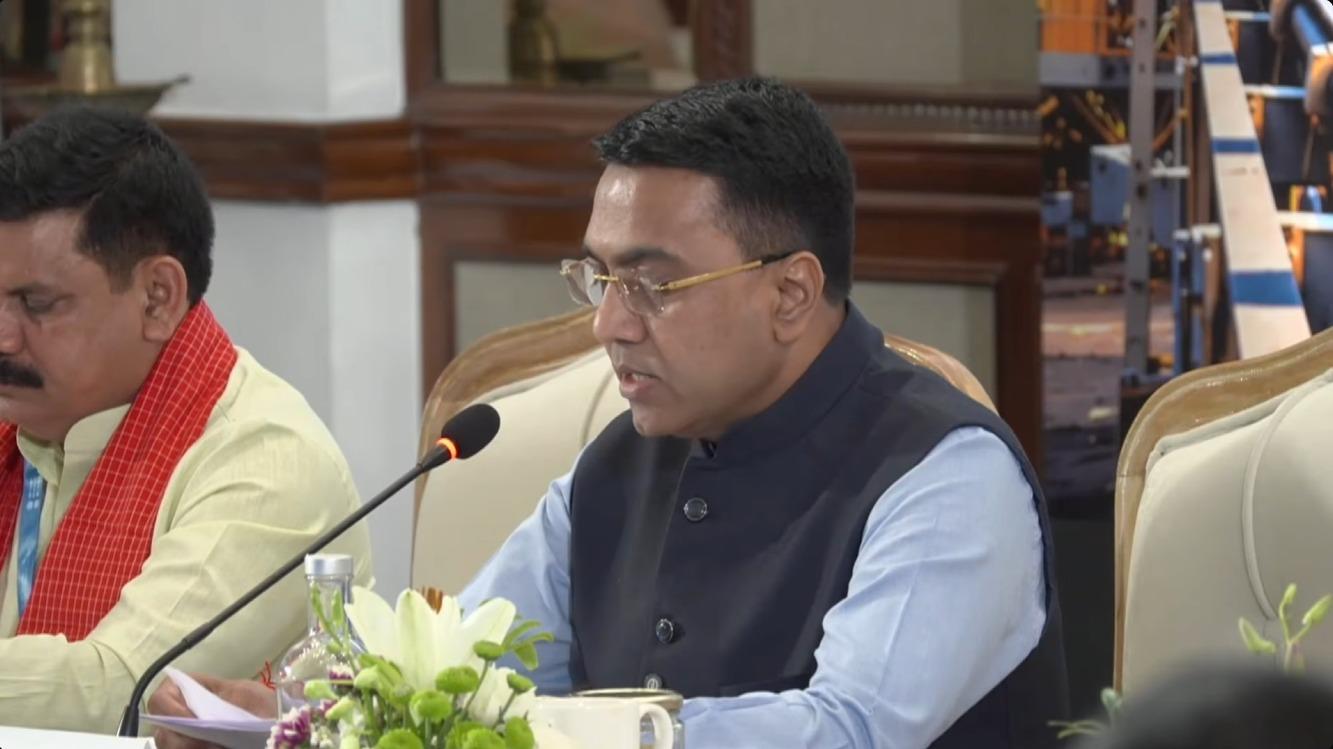
Panaji: Chief Minister Pramod Sawant on Thursday said the state government had sought a scientific review of 153 mining leases falling within eco-sensitive areas of the Western Ghats to determine whether eligible mineral resources could be opened for auction while safeguarding ecologically fragile locations.
Addressing a conference of mining ministers and officials on reforms in the mining and coal sectors in South Goa, Sawant said the state had raised the issue with the Centre, seeking a review of certain villages falling within eco-sensitive areas through the applicable legal process.
“Goa has around 153 mining leases falling within eco-sensitive areas of the Western Ghats. We have requested a scientific review of certain villages in these areas so that eligible mineral resources can be considered for auction while protecting ecologically sensitive locations,” the Chief Minister said.
The issue assumes significance as Goa looks to expand its mining operations and increase annual mineral production to 45 million tonnes through fresh mining and the processing of existing ore dumps.
The state has so far auctioned 17 mineral blocks, of which 16 have been operationalised. Its annual production has reached approximately 19.15 million tonnes against the Supreme Court-prescribed upper limit of 20 million tonnes per annum, Sawant said.
He said the state had the potential to generate around Rs 4,000 crore in annual revenue and create 4,000 to 5,000 direct and indirect employment opportunities by fully utilising its mining potential.
The Chief Minister also highlighted the difficulty in identifying land for compensatory afforestation, particularly for mining blocks involving forest land, and sought guidelines from the Union Ministry to find suitable solutions within the existing forest and environmental laws.
Calling for better coordination among authorities responsible for mining, forest and environmental clearances, Sawant suggested that applications should be processed simultaneously wherever legally permissible to avoid delays.
He said pre-auction assessments of habitations, religious structures, water bodies and other sensitive locations would help prevent complications after mining blocks were auctioned.
On the expansion of mining activities, Sawant said the state government had made progress under its ore dump policy, with eight dumps allotted to erstwhile leaseholders, of which two had received final permission from the Directorate of Mines and Geology.
An additional 20 dumps, containing approximately 39 million tonnes of material, have been auctioned, and the approval process is underway. The first dump has become operational, while efforts are being made to operationalise the remaining ones, he said.
The annual production potential from dump mining is estimated at 25 million tonnes, which, together with fresh mining, could take Goa’s overall potential production capacity to 45 million tonnes annually.
Sawant stressed that dump-handling activities would have to comply with environmental clearance conditions and prescribed safeguards to protect nearby biodiversity and restore affected areas.
He also highlighted the introduction of the ‘Bhumija’ ore tracking and management system, which incorporates GPS-based tracking of trucks and barges, electronic permits, digital trip sheets, online royalty payments and automated alerts for route diversions and overspeeding.
The state has also introduced independent mineral-grade testing, under which departmental officials collect samples from every 20,000-tonne lot for analysis, he said.
A state-level coordination committee headed by the Chief Secretary, with senior officials from the Mines, Forest, Environment and Revenue departments, has been established to address issues concerning mineral blocks and coordinate statutory approvals.
Sawant said the government would focus on operationalising all auctioned mineral blocks and dumps while strengthening the Directorate of Mines and Geology through recruitment, training and improved enforcement.
Drone surveys and satellite imagery would also be used to monitor mining activities in the state, he added.

