

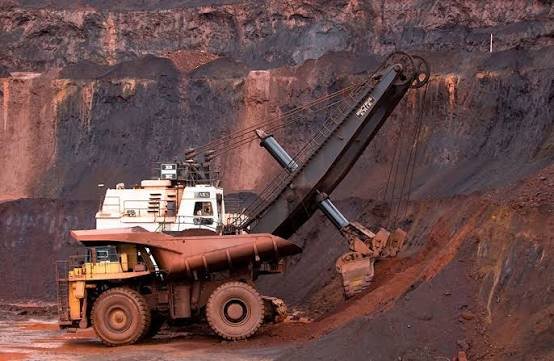
Panaji: Iron ore mining has caused estimated environmental, economic and social damage worth Rs 4,000 crore to Sirigao village in Goa’s Bicholim taluka over the last 50 years, according to a study released on Tuesday.
The environmental appraisal, authored by Dr Sagar Dhara of the South Asia People’s Action on Climate Change (SAPACC), estimates that iron ore sales from the village generated gross revenue of around Rs 7,000 crore during the period, while the total cost of mining to the community amounted to nearly 60 per cent of the revenue. The report was released in Goa on Tuesday by Goa Foundation, a green-NGO working out of the coastal state.
Commissioned by the villagers of Sirigao and completed in September 2026 after a two-year exercise, the report claims to be the first study in India to quantify the financial aspects of ecological and environmental damage caused by mining over five decades.
The study estimates direct human losses, including damage to agriculture, fisheries, water resources, health and houses, at Rs 1,000 crore. It puts the cost of social externalities, including loss of natural productivity and carbon emissions, at Rs 2,000 crore, while estimating that at least Rs 1,000 crore would be required to initiate ecological restoration.
The report says mining has led to contamination of water and soil with toxic heavy metals, destruction of traditional agricultural and forest-based livelihoods, and deterioration in the health of residents.
It claims that the village has lost its original clean water sources, forcing residents to depend on external alternatives. It also documents losses in paddy cultivation, cashew, coconut and mango production, dairy farming and traditional fisheries, besides the loss of forest produce such as firewood, timber, kokum and tamarind.
On health impacts, the appraisal estimates an elevated cancer risk of 6,900 to 8,200 per million people based on lifetime exposure to polluted air and water. It also points to an increase in respiratory illnesses, including asthma, allegedly linked to iron ore dust and air emissions.
The study further says mining-related vibrations and environmental changes have caused visible cracks in houses in the village.
The appraisal, based on discussions and interviews with senior residents as well as economic and scientific modelling, compares the estimated wealth extracted with the losses suffered by the community.
Calling for accountability, it says the state and central government agencies have failed in their duty to protect residents and the environment.
Among its recommendations, the report calls for compensation from mining companies and leaseholders for health-related injuries and livelihood losses, detoxification of soil and water, and ecological restoration of the affected areas.
It has also recommended that the use of local water and homegrown food be prohibited until independent testing establishes their safety.
The report further calls for cancellation of existing mining permissions and says no fresh mining should be permitted without the unanimous consent of the Sirigao Gram Sabha. It has also proposed that future mining companies furnish substantial bank guarantees, to be held by the High Court, to ensure funds are available for environmental protection.
The appraisal describes the damage to Sirigao’s environment as drastic and permanent, and urges that the principle of “polluter pays” be enforced.

