

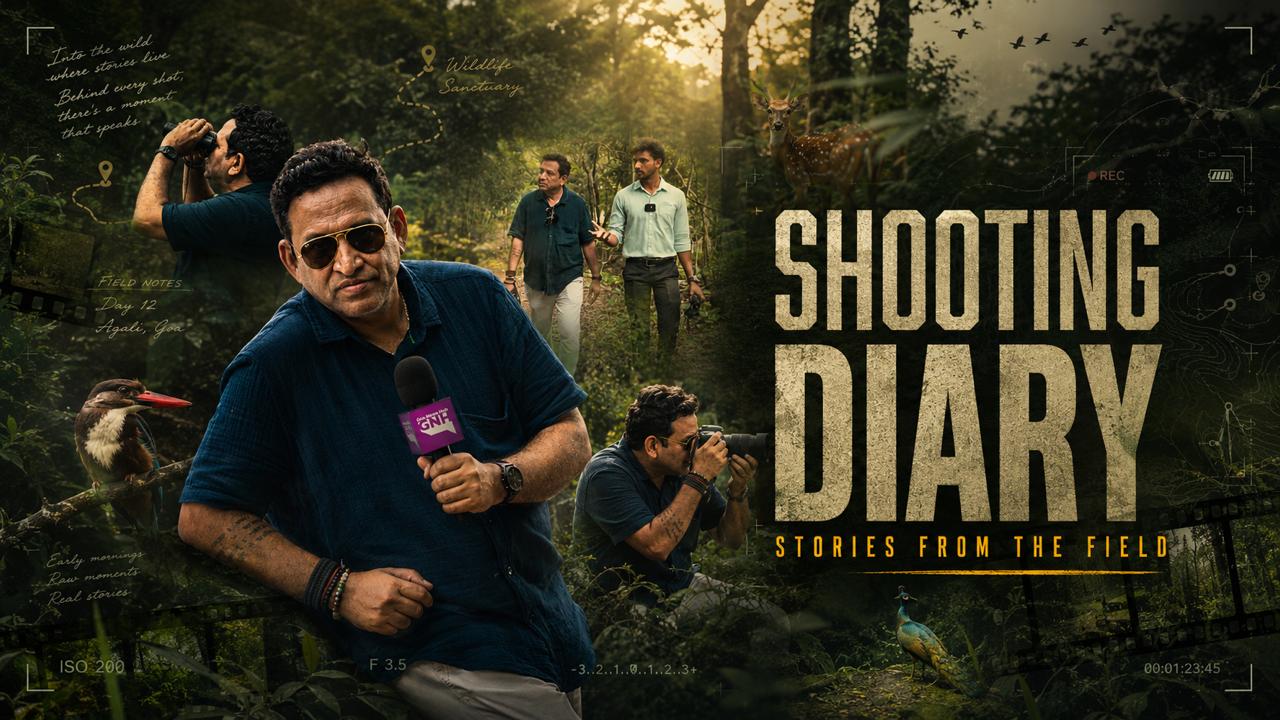
By RUPESH SAMANT
There are assignments that begin with a camera and end with an edited video. Then there are journeys that quietly change the way you look at the world. Our two-day shoot for ‘Passay’ at Bondla Wildlife Sanctuary belonged to the latter.
For most people, Goa is about beaches, sunsets and nightlife. But tucked away amidst the Western Ghats lies another Goa—one that wakes up to the songs of birds, breathes through towering forests and comes alive as the city sleeps. Bondla Wildlife Sanctuary offered us a chance to experience this side of Goa, not merely as visitors but as storytellers.
Our little team—myself, our production head Neeraj Bandekar, marketing boss who humbly doubles up as assistant camera guy Deepesh Naik and Muti talented and creative genius Ashvek Gaonkar—set out with our equipment and plenty of excitement. Unlike our routine assignments t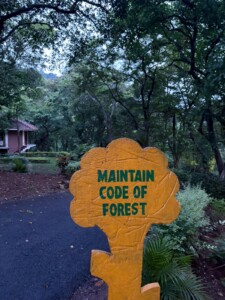 hat revolve around political developments, press conferences or breaking news, this shoot promised something entirely different.
Day One: Entering the Forest
We reached Bondla at around 5.30 in the evening. The sun was beginning its slow descent behind the hills, bathing the sanctuary in a soft golden light. There was an immediate sense of calm. Mobile phone signals became weaker, but somehow, the connection with nature became much stronger.
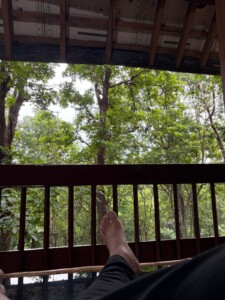 Our accommodation for the night was at the beautifully maintained ‘Sylvan Cottages’, managed by the Goa Forest Development Corporation. Nestled amidst thick greenery, the cottages are ideal for anyone wishing to experience the forest beyond a hurried day visit. We must credit it to GFDC chairman Dr Deviya Rane who has thought about this facility that attracts several locals and tourists to spend their time with the nature.
The cottages are simple yet comfortable, with all the basic amenities needed for a peaceful stay. What struck me most was the silence. There were no traffic horns, no loud music, no constant rush of notifications. Instead, the soundtrack consisted of cicadas, distant bird calls and leaves swaying in the evening breeze.
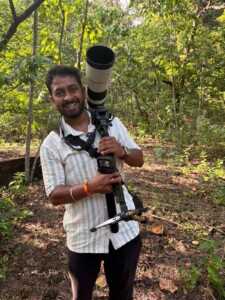 After quickly freshening up, we wasted no time. Cameras in hand, we headed deeper into the sanctuary with our nature guide Narayan Naik, who would become an invaluable companion during our stay. Narayan had no formal training about the wildlife but his experience in the Bondla wildlife sanctuary was his teacher and I can say “Narayan knew everything.”
Following the Signs of the Wild
One of the first stops was an artificial waterhole created inside the sanctuary for wildlife. We did not immediately spot any animals, but the guide pointed towards something we had almost missed.
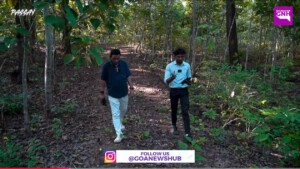 Fresh pug marks.
The soft mud around the waterhole was filled with footprints left behind by deer that had visited only a short while earlier. Looking at those delicate impressions in the earth was strangely exciting. Even though the animals themselves remained hidden, their presence could be felt all around us.
Our guide explained how these waterholes become lifelines during the dry months, attracting various species of wildlife. Suddenly, the forest wasn’t just a collection of trees—it became a living ecosystem where every small intervention played an important role.
 A little ahead lay another fascinating sight—a specially developed plot of lush elephant grass cultivated exclusively for wild herbivores. Watching acres of tall grass swaying gently in the breeze while learning that it had been planted specifically to ensure adequate grazing for wildlife made me appreciate the meticulous planning that goes into conservation.
People often think wildlife sanctuaries are only about protecting animals from humans. Bondla showed us that conservation also means caring for animals every single day by ensuring food, water and habitat.
As dusk settled over the sanctuary, luck finally smiled upon us.
A herd of deer cautiously emerged from the forest.
For several minutes, none of us spoke. Neeraj quietly adjusted the camera lens while Deepesh was ready with his camera while Ashvek’s Osmo played the role of a loyal partner. We simply stood there, watching them graze peacefully. Shot after shot, we could actually see the wildlife in front of us, peacefully enjoying their life.
It was one of those rare moments where journalism gave way to childlike wonder.
Dinner at The Den
Back at the campus, another pleasant surprise awaited us.
The ‘Den’, Bondla’s in-house canteen, turned out to be far more than a simple dining hall. Surrounded by greenery, it serves delicious home-style meals, including both vegetarian and non-vegetarian options.
After an evening spent walking through the forest, every dish somehow tasted better.
There was another feature that instantly caught our attention—a large-screen television mounted inside the dining area. That was the perfect setting to watch FIFA World Cup matches there. Sitting there, I could easily imagine the place filled with football fans celebrating late into the night after a day spent exploring the sanctuary. And the best part is that you can scream in support of your team sitting in Den because there is no neighbour who would have his sleep disturbed.
It is this combination of wilderness and comfort that makes Bondla unique.
The conversations over dinner were as memorable as the food itself. We replayed the day’s footage, laughed over the multiple retakes, discussed tomorrow’s schedule and shared stories from earlier assignments. Away from the pressures of deadlines, we weren’t just colleagues for the evening—we were travellers enjoying an unforgettable experience together.
 The forest outside slowly disappeared into darkness, but the sounds never stopped. Every now and then, an unfamiliar bird call or the chirping of insects reminded us that while we were preparing to sleep, the forest had only just begun its night shift. While wild was at the play in the jungle, our eyes were shutting down.
A Morning Written by Birds
The next morning began before sunrise.
Unlike city mornings interrupted by alarm clocks, Bondla wakes you gently.
The cool breeze flowing through the trees and the chorus of birds outside our cottages made sure none of us wanted to sleep in.
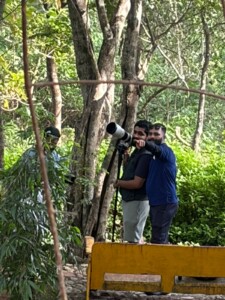
After a quick cup of tea, we joined our nature guide for what would become one of the highlights of the trip—bird watching.
Walking quietly through the forest demanded patience. The guide taught us something every wildlife enthusiast eventually learns: in the jungle, you don’t search with your eyes first—you search with your ears.
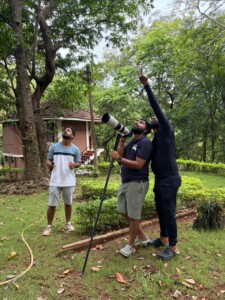
Every few minutes he would stop, point towards the canopy and identify birds simply by their calls. Slowly, we too began spotting them—perched on branches, flying between trees or briefly appearing before disappearing into the foliage.
One of the biggest attractions of Bondla Wildlife Sanctuary is its incredible birdlife, making it a paradise for birdwatchers and nature photographers. As we walked through the forest with our nature guide in the early morning hours, the sanctuary came alive with a symphony of calls from birds hidden high in the canopy. The guide’s trained ears could identify species long before we could spot them. Among the most memorable sightings was the magnificent Malabar Grey Hornbill, one of the Western Ghats’ iconic endemic birds. Watching the hornbill glide effortlessly between towering trees was a sight to behold. Bondla is also home to several elusive forest birds that are more often heard than seen. Species such as the Heart-spotted Woodpecker, White-bellied Treepie, Orange-headed Thrush, Indian Pitta (during its migratory season), Black-naped Monarch, Asian Fairy Bluebird, Malabar Trogon, and the shy Brown-cheeked Fulvetta reward only the patient observer
It was remarkable how much life surrounded us that we would have otherwise walked past unnoticed.
For someone accustomed to chasing headlines every day, the experience was unexpectedly therapeutic. There was no urgency, no competition and no deadline. Nature unfolded at its own pace, and all we had to do was observe.
More Than a Shoot
By the time we packed our equipment at around 11 a.m. and prepared to leave Bondla, it no longer felt like we were wrapping up another assignment.
We were leaving behind an experience.
Over just two days, Bondla had taught us that forests are not merely tourist destinations—they are classrooms. Every trail tells a story. Every tree shelters life. Every waterhole sustains an ecosystem. Every guide carries generations of knowledge waiting to be shared.
As journalists and content creators, we often rush from one assignment to another without truly absorbing the places we visit. Bondla forced us to slow down.
It reminded us that sometimes the best stories are not the loudest ones.
Driving back towards the city, mobile phones once again found network coverage. Messages started pouring in. Calls resumed. Deadlines returned.
Life had switched back to its usual pace.
But somewhere between the deer tracks near the waterhole, the tall elephant grass, the peaceful night at Sylvan Cottages, the laughter over dinner at The Den, and the early morning bird calls, Bondla had quietly become one of my most cherished assignments.
When people ask me about shooting Passay at Bondla Wildlife Sanctuary, I don’t remember just the footage we captured.
I remember the silence.
I remember the forest.
And I remember four friends—Neeraj, Deepesh, Ashvek and I—returning with far more than a completed episode.
We returned with memories that will last much longer than the video itself.
(You can watch the entire experience by visiting our YouTube page)

