

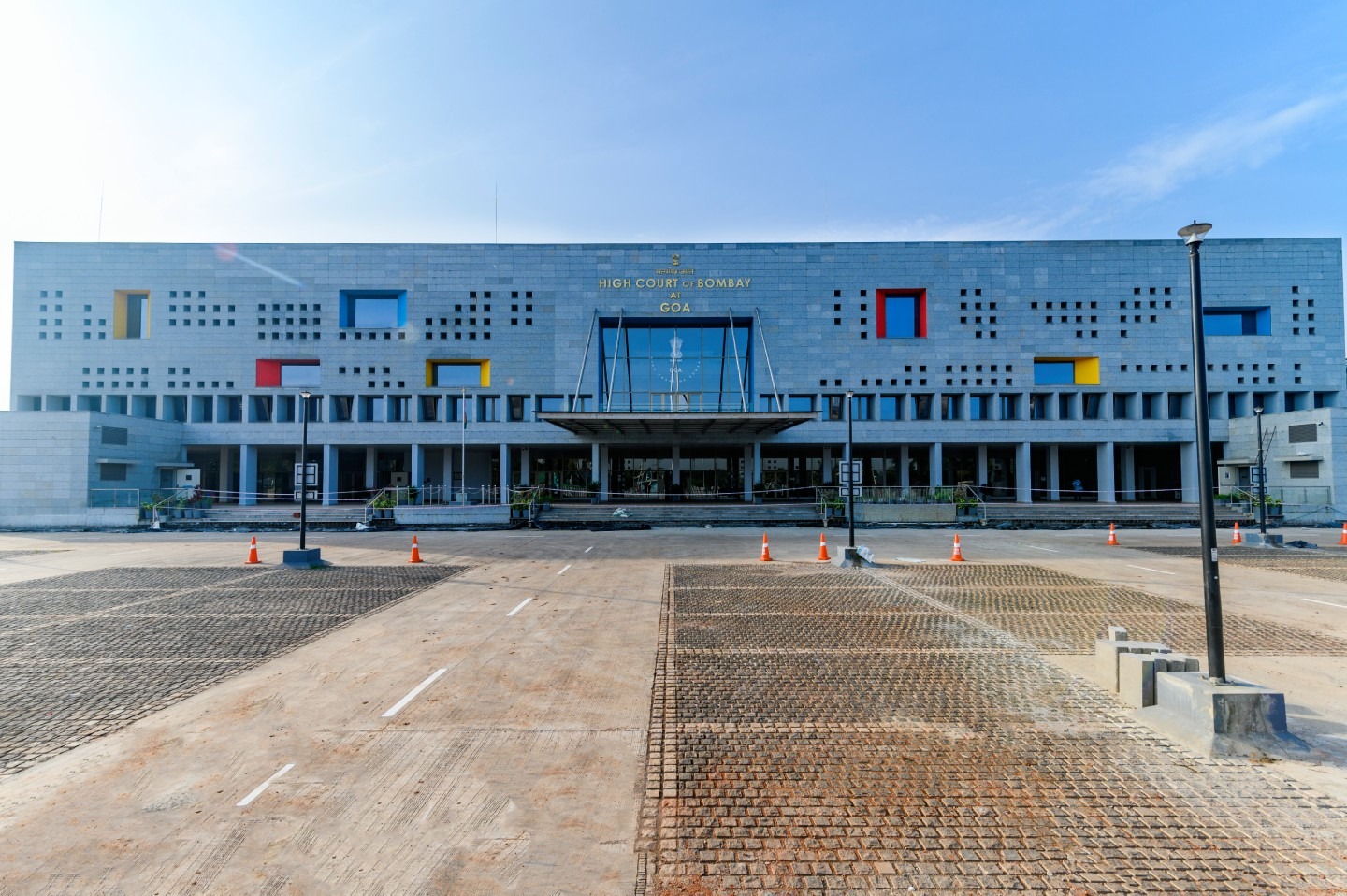
Panaji: The Goa Bench of the Bombay High Court on Thursday reserved its order on the Goa government’s appeal challenging the acquittal of former Tehelka Editor-in-Chief Tarun Tejpal in the 2013 sexual assault case.
The Division Bench comprising Justice Dr. Neela Gokhale and Justice Amit Jamsandekar heard arguments on behalf of the petitioner and the defendant on Thursday, reserving the order for a later date.
Appearing for the State through video conferencing, Solicitor General of India Tushar Mehta argued that the trial court committed a serious error by assessing the complainant’s conduct based on preconceived notions of how a victim of sexual assault should behave.
Mehta submitted that there is no universal standard for a victim’s reaction, as responses vary according to an individual’s education, personality, social background, and circumstances.
He argued that the complainant, being an educated and independent journalist, could continue discharging her professional responsibilities despite the alleged assault, and such conduct could not be used to doubt her credibility.
Addressing alleged inconsistencies in the complainant’s statements, Mehta contended that minor variations in testimony are natural and do not undermine the truthfulness of a witness. He argued that the trial court wrongly relied on insignificant discrepancies instead of examining whether the core allegations remained consistent.
The Solicitor General further argued that the complainant’s various contemporaneous documents—including her complaint to her employer, messages exchanged after the incident, and other records—demonstrated that her version of events had remained materially consistent from the very beginning.
Referring extensively to an email sent by Tejpal to the complainant after the alleged incident, Mehta submitted that the accused had apologised for his “lapse of judgment”, described the episode as “devastating”, expressed shame, and stated that he believed the encounter had been consensual. According to Mehta, these statements amounted to an admission that an encounter had taken place and were inconsistent with the defence’s present stand that no incident had occurred inside the hotel lift.
Mehta argued that if nothing had happened, there would have been no reason for repeated expressions of remorse, shame, or references to lifelong punishment in the apology email. He also pointed to the accused’s statement that he would not dispute the complainant’s account or underplay her anger and hurt, contending that these were significant admissions.
Senior Advocate Abad Ponda, appearing for former Tehelka editor Tarun Tejpal, continued his rebuttal submissions before the Bombay High Court at Goa on Thursday, arguing that the prosecution had misinterpreted Tejpal’s apology emails and wrongly relied on them as admissions of a physical sexual encounter.
Referring to the testimony and cross-examination of prosecution witness Shoma Chaudhury, Ponda submitted that while her statement under Section 164 of the CrPC referred to Tejpal having a “different version” of the incident, her cross-examination made it clear that, according to Tejpal, the only “sexual encounter” was a sexual conversation outside Block No. 7 on November 7, 2013. He argued that the prosecution was incorrectly treating the phrase “fleeting consensual encounter” in the apology emails as an admission of physical intimacy.
Ponda maintained that none of Tejpal’s apology emails contained any admission of a consensual physical or sexual encounter. According to him, the reference was only to a consensual verbal conversation of a sexual nature and not to any physical act.
He argued that if the apology had truly amounted to an admission of a physical or sexual encounter, there would have been no need for the defence to extensively challenge the CCTV footage, lift evidence, and other factual aspects of the case.
The defence also argued that the prosecution was reading meanings into the apology that were not actually expressed and urged the Court to interpret the documents strictly as written.
Referring to the complainant’s WhatsApp conversations, Ponda submitted that her own reaction to the apology demonstrated that she did not consider it an admission of sexual assault.
Throughout his submissions, Ponda argued that the prosecution had failed to establish that the apology emails corroborated the complainant’s allegations and maintained that the evidence, when read in its entirety, created reasonable doubt that must operate in favour of the accused.

