

By Adv. Shashank S. Narvekar
Councillor, Mapusa Municipal Council
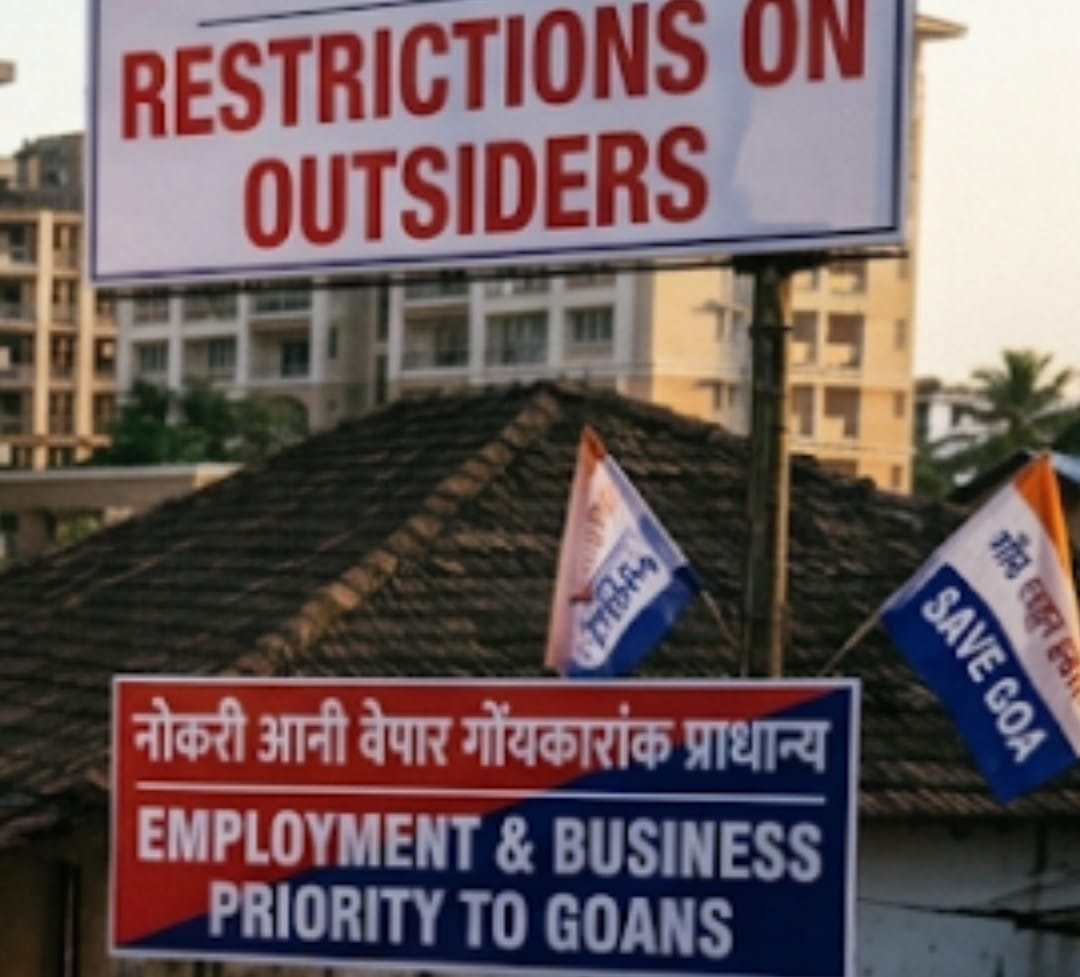
Goa’s unique identity is the product of its distinct history, vibrant culture, language, deep-rooted traditions, and the enduring resilience of its people. However, as the state undergoes rapid development and transformation, a vital concern has emerged among many Goans: whether local voices are still receiving adequate representation in the key decisions shaping Goa’s future.
A prominent issue in contemporary public discourse is the growing perception that a significant number of senior administrative and law enforcement positions are occupied by officers from outside the state. These bureaucrats are appointed through established constitutional and statutory processes and are expected to discharge their duties with strict impartiality and legality. Nevertheless, the perceived lack of local leadership remains a point of public discussion.
This dynamic is visible in the governance structure, where key positions such as the Chief Secretary, the Director General of Police (DGP), the Inspector General of Police (IGP), and District Magistrates or Collectors are often filled by officers from the AGMUT (Arunachal Pradesh-Goa-Mizoram and Union Territories) cadre. Many citizens feel that a greater presence of qualified Goans in such decision-making roles would strengthen public confidence and ensure that local issues are understood with greater familiarity and sensitivity.
Simultaneously, the evolving demographic and electoral landscape has sparked public debate. Migration has undeniably enriched Goa’s economy and cultural diversity, and the Constitution of India guarantees every citizen the right to reside and work anywhere in the country. Nevertheless, the pace of these demographic changes has led many Goans to express concerns about their possible long-term impact on public policy, cultural heritage, environmental conservation, and the interests of the local population. These are legitimate public policy questions that deserve thoughtful and democratic discussion.
The objective of raising these issues is not to undermine the rights, dignity, or contributions of any individual or community, nor is it to create division between Goans and non-Goans. Rather, it is to encourage a constructive and mature dialogue on how Goa can preserve its distinctive identity while remaining firmly committed to the constitutional values of equality, fraternity, and the rule of law.
A robust democracy thrives when its citizens can freely express concerns regarding governance, representation, and public policy. When such discussions are approached with mutual respect and civic responsibility, they strengthen democratic institutions rather than weaken them.
Looking ahead, Goa’s future must be anchored in transparent governance, equal opportunity, accountable public administration, environmental protection, and meaningful civic engagement. The ultimate goal must be to ensure that modernization and progress do not come at the cost of erasing Goa’s irreplaceable heritage and identity.
Ultimately, this is not a question of “Goans versus non-Goans.” The core issue is whether the governance of Goa continues to reflect the aspirations of its people while fully upholding the constitutional rights, equality, and dignity of every Indian citizen.

