

By Adv. Vinayak D. Porob
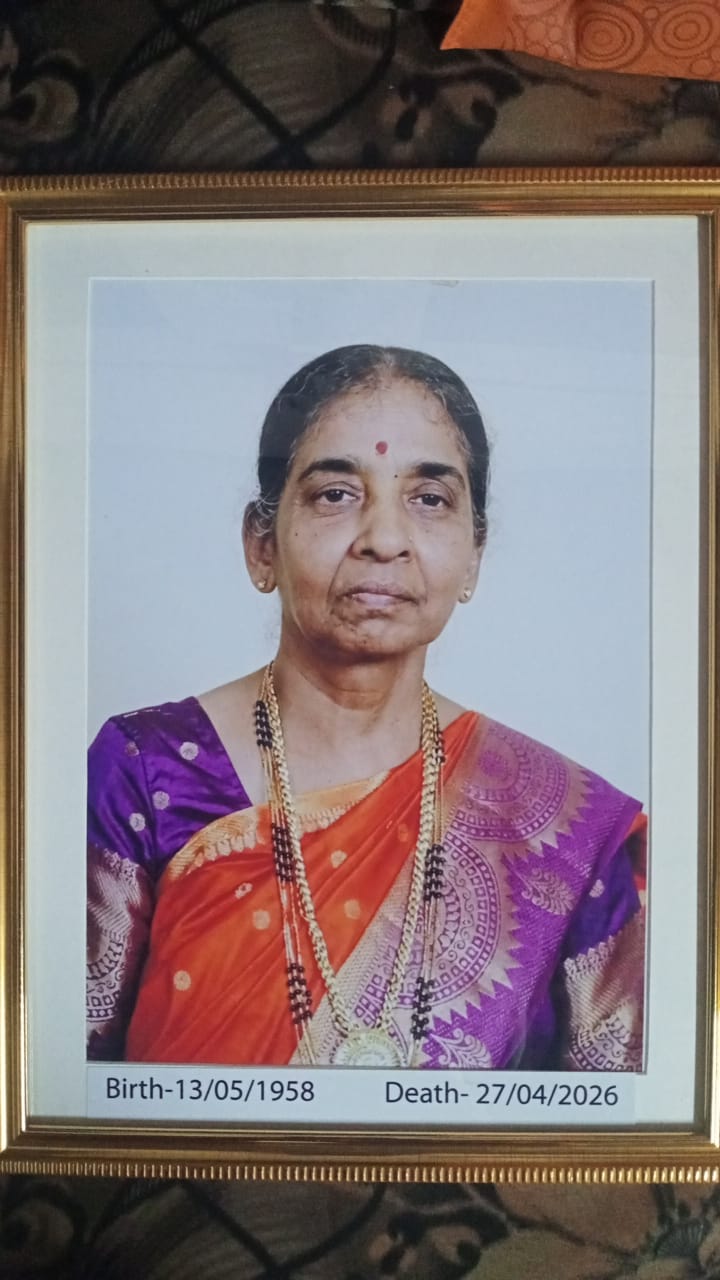
The sad demise of my mother-in-law, Vidhya Vinayak Pai, who was affectionately called Kaki in the family, led me to deeply reflect on profound questions that confront every human being at some point in life. Where does a person’s soul go after death? What happens to the individual beyond the physical end? And whether the departed can still perceive or remain connected to their loved ones? In seeking answers, and upon researching the subject of death, the journey of the soul, and the immutable law of karma, it emerges that death is not a termination of existence but a significant transition wherein the soul separates from the mortal body and continues its onward journey, carrying with it the subtle impressions of all past actions.
This understanding describes a post-death path where souls, particularly those burdened by wrongful deeds, may endure hardships such as hunger, thirst, fear, isolation, and suffering, thereby illustrating the consequences of one’s actions. Central to this understanding is the doctrine of karma, which asserts that every individual is responsible for their actions and must experience their results, whether in the form of happiness or suffering, each corresponding to one’s deeds, reinforcing the principle of moral justice and correction.
It also highlights the importance of post-death rituals such as Shraddha and Pinda Daan, which are believed to aid the departed soul by providing symbolic sustenance, assisting in its onward journey, and bringing peace, failing which the soul may remain unsettled. The concept of crossing a difficult and fearful path, often described as the Vaitarani River, further symbolizes the challenges faced by the soul, where those who have lived a righteous and charitable life are able to pass with ease while others endure suffering, thereby emphasizing the value of good deeds.
It is further understood that, after experiencing the consequences of accumulated karma, the soul takes rebirth in different forms and circumstances in accordance with its remaining actions, thus continuing the cycle of birth and death known as samsara, from which liberation can be attained only through a life of righteousness, self-discipline, devotion, and spiritual understanding. Beyond these descriptions, the deeper essence of such research lies in guiding individuals towards ethical living, encouraging compassion, truthfulness, charity, and awareness of life’s impermanence, so that one may strive not only for a peaceful journey after death but also for ultimate liberation, making this not merely a reflection on death but a meaningful guide for conscious and responsible living.
Losing a loved one always brings immense pain, grief, and a deep sense of emptiness that words often fail to express, yet in hindsight, it can be understood that death is not merely an end but a transition towards a higher journey of the soul, and that life after death is regarded as a step towards the ultimate liberation of the soul. Therefore, when viewed from this spiritual perspective, the sorrow, attachment, and longing that arise from such a loss can gradually be transformed into a sense of acceptance, peace, and even blessing, as one begins to believe that the departed soul has moved forward in its journey and is freed from the limitations of the physical world, encouraging the living not only to cherish the memories of their loved one but also to convert their grief into prayers, goodwill, and positive thoughts for the eternal peace and liberation of the departed soul.
Disclaimer: This article reflects the personal opinion of the author and is based on the author’s own beliefs, interpretations, and perspectives. This article is written in memory of the author’s mother-in-law, Late Vidhya Vinayak Pai, of St Estevan, Tiswadi, Goa (12th day remembrance 🙏🏻 Om Shanti 🙏🏻).

