

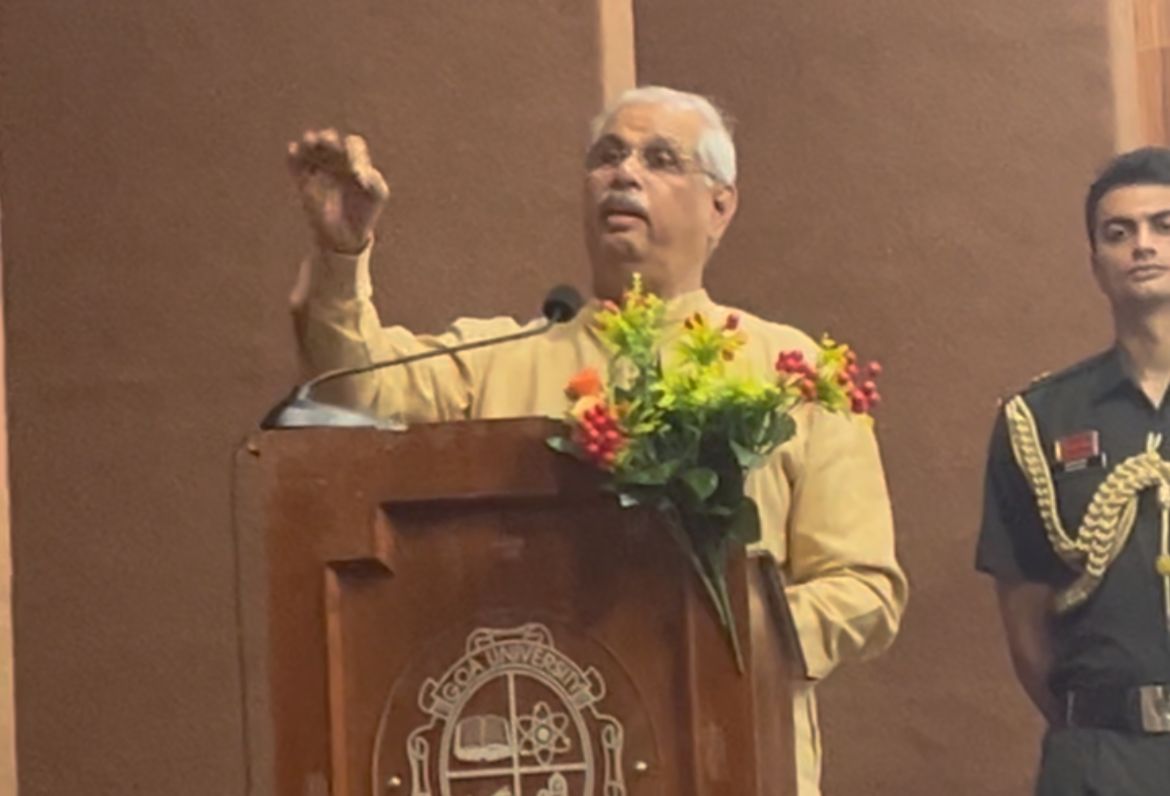
Panaji: Terming it “unfortunate” that there is no minimum educational qualification required to enter politics in the country, Tamil Nadu and Kerala Governor Rajendra Arlekar on Saturday called for greater reflection on the issue and urged youth to enter public life with knowledge and awareness.
Addressing a National Youth Parliament programme in Panaji on Saturday, Arlekar said platforms like these should not just be symbolic, but must focus on what participants aim to learn and achieve.
Arlekar, along with Goa Governor P. Ashok Gajapathi Raju, inaugurated the event.
Drawing from an anecdote often shared by veteran leader Lal Krishna Advani, and a satirical poem by Hindi poet Kaka Hathrasi, he highlighted the contrast between politics and other professions.
He said even to drive a car, one requires basic qualifications, training, and a licence, while most professions such as law, medicine, teaching, and even entry-level government jobs mandate minimum educational criteria.
“Even a peon in an office is required to have passed Class 10, and officers are expected to be graduates or postgraduates. But in politics, there is no such requirement. One can even become a minister without basic educational qualifications,” Arlekar said.
He said this situation reflects the need for serious introspection, particularly at a time when governance and policymaking demand deeper understanding and responsibility.
“There is training for IAS, IPS… but what training is required to be a political leader? It is unfortunate that we don’t have any system to develop a political leader,” he commented.
The Governor stressed that youth must question whether such a system is desirable and prepare themselves to bring informed leadership into politics.
Quoting Prime Minister Narendra Modi, Arlekar said there is a call to bring at least one lakh committed young people into politics who are well-versed in India’s history, geography, and constitutional framework.
He said the future leadership of the country should emerge from a generation that understands India’s cultural unity, historical journey, and developmental aspirations.
Urging young participants to take the responsibility seriously, Arlekar said they must equip themselves with education, awareness, and a sense of national purpose before stepping into public life.

