

By Adv. Vinayak (Mama) D. Porob,
Mapusa- Goa.
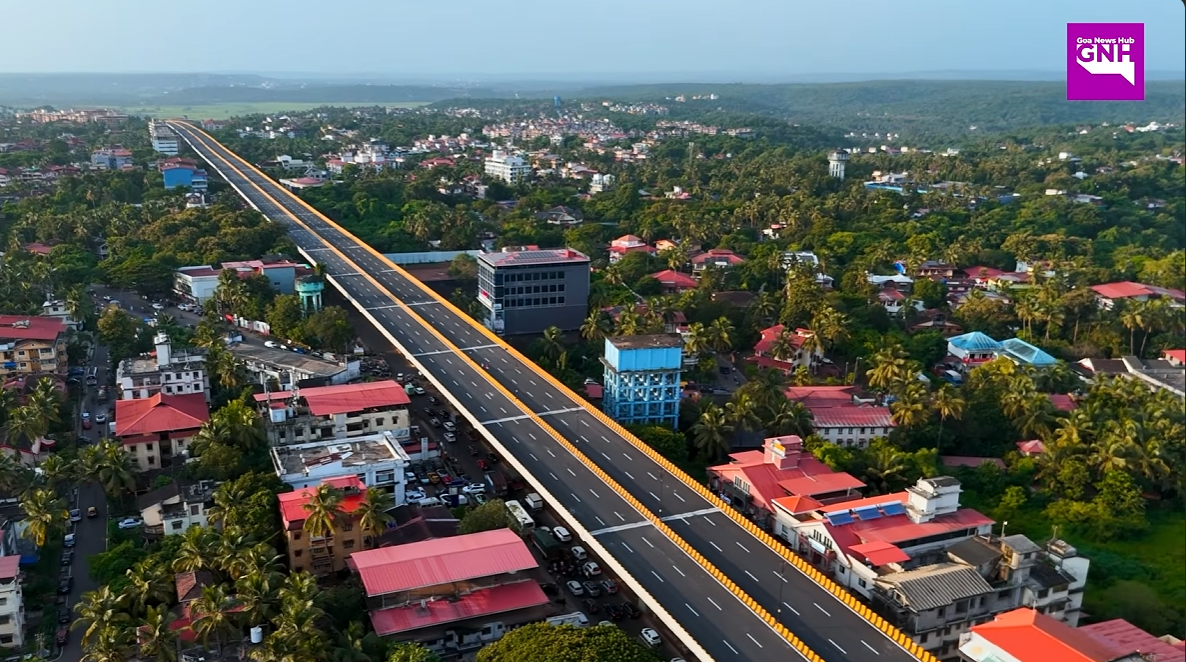
The Porvorim Elevated Corridor is undoubtedly a major and welcome infrastructure development for Goa. For years, the people of Porvorim have faced serious traffic congestion, particularly on the NH-66 stretch passing through the area. The continuous movement of private vehicles, commercial vehicles and through traffic has placed enormous pressure on the existing road network and made daily travel increasingly difficult.
The construction of the elevated corridor therefore deserves to be welcomed. By taking a substantial portion of through traffic above the existing road, the corridor has the potential to reduce congestion and make movement through Porvorim considerably smoother.
However, the real benefit of the project for the people of Porvorim may not necessarily be that they themselves will use the flyover. Many local residents will have to continue to use the existing roads because there is no direct connection from Porvorim to the elevated corridor. But this does not mean that the corridor will not benefit them. In fact, its greatest benefit to the local population could be indirect.
If vehicles travelling through Porvorim move on the elevated corridor, the existing roads below should become substantially less congested. The internal roads of Porvorim, which for years have carried both local traffic and heavy through traffic, can then increasingly serve the people who actually live in the area.
A resident travelling from one part of Porvorim to another should ideally be able to do so without being caught in long queues created by vehicles travelling towards Panaji, Mapusa or other destinations. Children travelling to school, people going to work, residents visiting shops and markets and families travelling within the locality could all benefit from reduced traffic pressure.
This is perhaps the most important way in which the corridor can improve the quality of life in Porvorim. A local resident does not necessarily have to drive on the flyover to benefit from it. The benefit can come from the traffic that is taken away from the roads below.
The project should therefore be seen not merely as a flyover for motorists but as an opportunity to restore the existing roads to the local community. If the heavy flow of through traffic is successfully separated from local traffic, Porvorim could become considerably more comfortable for its residents.
At the same time, the success of the project will depend upon proper traffic management. The entry and exit points of the corridor must be carefully planned and continuously monitored. There is little benefit in taking traffic smoothly over an elevated road if vehicles are subsequently brought into congestion at the point where they enter and exit.
Another aspect that will have to be closely watched is the traffic coming from the beach areas through Chogam Road towards Porvorim. It will be important to assess whether this traffic continues to add pressure to the Porvorim road network even after the elevated corridor now becoming fully operational. If such traffic continues to cause congestion, an alternative route or suitable diversion should be identified and worked out in the near future. Traffic planning must remain dynamic and respond to actual traffic patterns rather than allowing a new congestion point to develop.
The adjoining junctions, service roads and connecting roads must therefore receive equal attention. Local roads should remain easily accessible and traffic entering or leaving the corridor should merge safely and efficiently with the existing road network. Wherever improvements are required, they should be undertaken without delay.
The objective should be simple, through traffic should move smoothly on the elevated corridor and local traffic should move freely on the roads below.
This separation can bring a much-needed change to Porvorim. For years, local residents have had to share their road network with enormous volumes of traffic passing through the locality. If that traffic is now largely taken above the existing road, Porvorim can begin to function more like an urban area rather than simply being a passage for vehicles travelling across Goa.
It must also be recognised that NH-66 is a national highway. Facilitating traffic on such an important highway is a legitimate and necessary infrastructure objective. Vehicles travelling through Goa must also have safe and efficient connectivity. There is nothing wrong with the corridor being used by through traffic. Indeed, that is one of the reasons why such infrastructure is required.
The important point is that the development of a national highway should also improve the quality of life of the people living alongside it.
The authorities should therefore continue to observe traffic patterns after the corridor becomes fully operational. If congestion develops at any entry point, exit, junction or connecting road, corrective measures should be taken. Good infrastructure does not end with construction. It requires continuous assessment, maintenance and improvement.
There is also a larger issue concerning the credit for the project. Any government elected by the people has a responsibility to develop infrastructure. Roads, bridges and highways are not gifts to citizens; they are part of the basic responsibilities of governance.
The true measure of the success of the Porvorim Corridor will therefore not be the inauguration ceremony, political speeches or the question of who receives the credit. It will be what ordinary people experience on the ground.
If the internal roads of Porvorim become less congested, if local residents can travel more easily, if junctions become less congested and if the daily movement of people becomes safer and more convenient, then the project will have delivered the kind of benefit that Porvorim has been waiting for.
The corridor should therefore be welcomed with optimism. It has the potential not only to improve the movement of traffic on NH-66 but also to give the internal roads of Porvorim back to its residents.
Ultimately, development should not be measured by who inaugurates a project or who takes credit for it. It should be measured by whether ordinary citizens experience a better quality of life.
The Porvorim Corridor should not merely take traffic above Porvorim; it should help bring freedom from traffic congestion to the people of Porvorim.
( Personal Opinion of the writer)

