

Article by: Adv. Vinayak D. Porob, Mapusa-Goa
The legal profession is one of the noblest professions in society because it is founded upon trust, discipline, ethics and responsibility. Courts function effectively only when there exists mutual respect between the Bench and the Bar. Recent judicial observations regarding the treatment and nurturing of young advocates have once again highlighted the urgent need to strengthen professional values within the legal fraternity.
The Hon’ble Supreme Court of India has recently directed the constitution of Grievance Redressal Committees involving members of the judiciary, Bar Associations and Bar Councils to maintain healthy Bar-Bench relations and to ensure amicable and timely resolution of disputes and misunderstandings arising within the legal fraternity. Such institutional mechanisms are intended to preserve the dignity, discipline and harmony essential for the effective administration of justice. The initiative also reflects the growing need to create a professional environment where young advocates are guided, protected and mentored while simultaneously ensuring accountability, ethics and discipline within the profession.
Young lawyers entering the profession today face enormous pressure. They enter courtrooms with dreams, ambition and determination, yet many struggle with lack of guidance, financial instability and professional insecurity. The initial years of advocacy are often the most difficult phase in a lawyer’s life. During this period, encouragement, patience and mentorship from seniors and the judiciary become extremely important.
At the same time, the profession must also honestly introspect about the growing decline in discipline and ethics among certain sections of young advocates. Instead of focusing upon sincere learning, hard work and professional growth, some individuals unfortunately indulge in unhealthy practices which damage the culture of the profession itself.
Unreported incidents are increasingly heard regarding attempts to poach clients of senior advocates by spreading false stories, creating mistrust or maintaining indirect contact with clients even after leaving office chambers with an expectation of independently securing briefs. Some misuse office access, monitor case status updates of seniors’ clients for personal advantage, or breach confidentiality and trust within chambers. Allegations are also heard regarding theft of books, legal material or misuse of office resources and even visiting jails and falsely representing that they are still part of a senior advocate’s office and assuring clients that the senior advocate will appear for arguments etc.
Another serious concern affecting the work culture of legal offices is the growing lack of professional boundaries within chambers. Excessive personal involvement and inappropriate love relationships between colleagues irrespective of their marital status often create unnecessary conflicts, distractions, emotional tension and unhealthy office politics, ultimately disturbing the discipline and work atmosphere expected in a professional legal environment. A law office is not merely a workplace; it is a space of learning, trust and responsibility where professional conduct and mutual respect must always prevail.
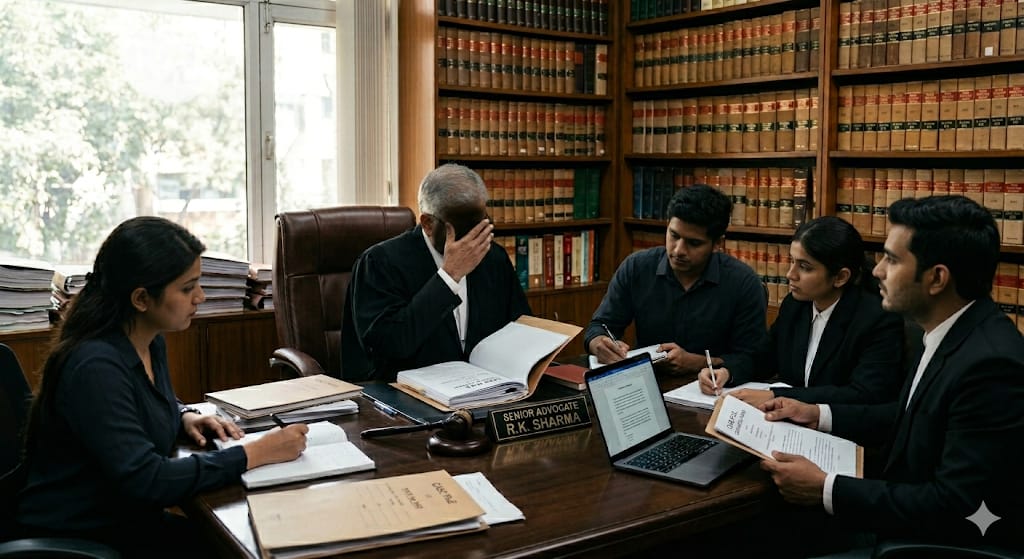
However, responsibility does not lie only upon junior advocates. Senior advocates and law offices must also introspect deeply about the treatment of juniors. Many young lawyers work tirelessly for long hours under immense pressure while receiving inadequate or no financial compensation. In many chambers, juniors are expected to survive merely on assurances of “future learning and exposure,” despite contributing significantly to drafting, research, client coordination and court work.
Financial dignity is an essential aspect of professional dignity. A junior advocate who is overworked, underpaid and financially insecure cannot be expected to maintain long-term professional stability. Adequate compensation is not charity; it is recognition of effort, loyalty and contribution. Seniors who expect honesty, discipline, confidentiality and commitment from juniors must equally ensure fair remuneration, respectful treatment and humane working conditions.
The relationship between a senior and junior advocate has traditionally been one of mentorship, confidence and professional guidance. Juniors learn advocacy, drafting, ethics and court craft from seniors through years of observation and experience. When this relationship is weakened either by disloyal conduct from juniors or exploitative practices by seniors, the profession itself suffers.
The future of the justice delivery system depends not merely upon strong courts but also upon a disciplined, ethical and financially secure Bar. Young lawyers deserve encouragement, opportunities, mentorship and dignity. Simultaneously, they carry a duty to maintain loyalty, honesty, discipline and professional ethics.
The legal profession cannot survive merely on legal knowledge. It survives upon character, integrity and mutual respect. Only when seniors mentor responsibly and juniors conduct themselves ethically can the noble tradition of the profession continue with dignity and honour.
( Disclaimer :
The views expressed in this article are personal and intended solely for academic and professional discussion on ethics, discipline and workplace culture within the legal fraternity. No individual, advocate, office or institution is specifically referred to or targeted.)

