

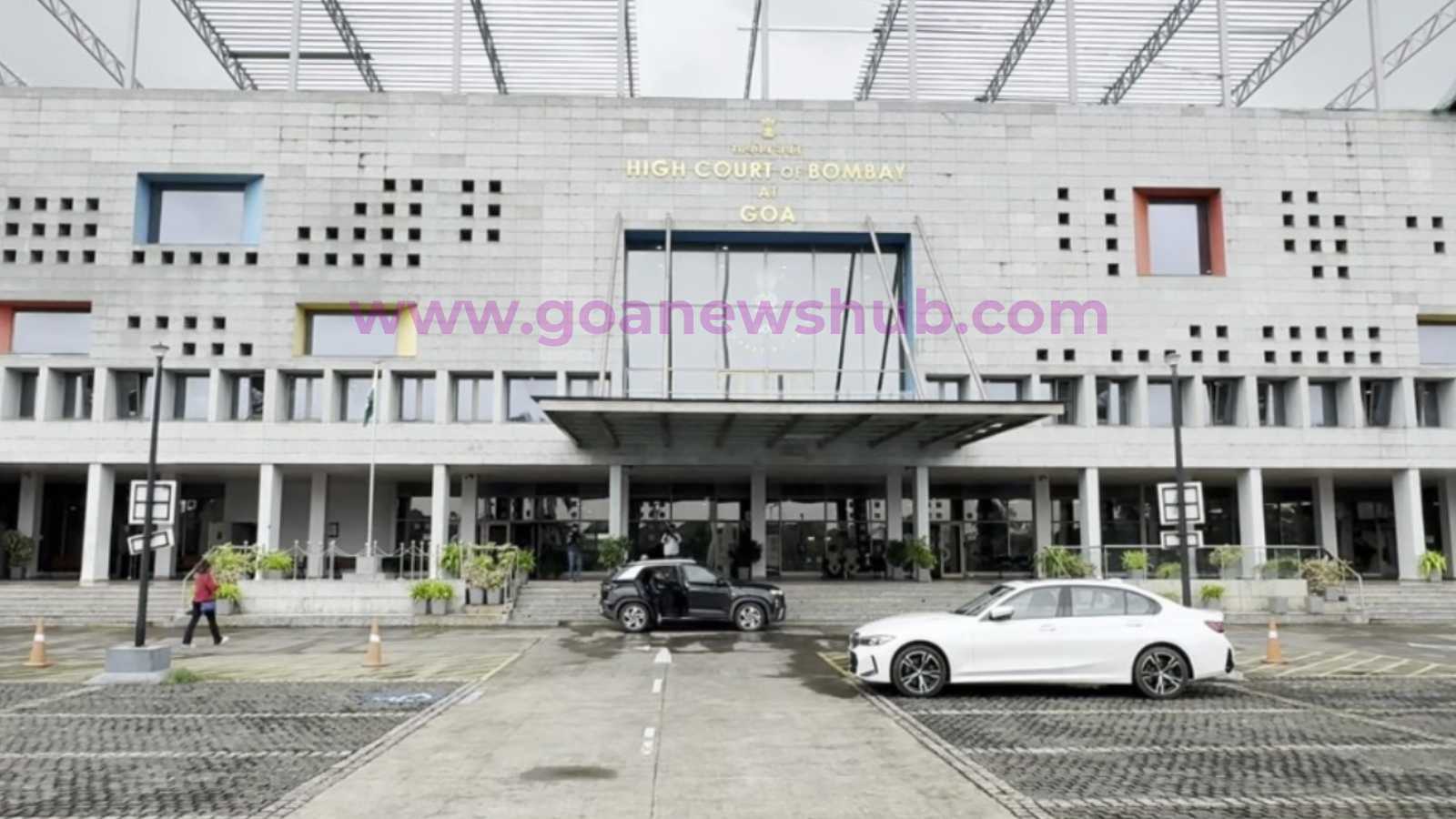
PORVORIM: The Goa Bench of the Bombay High Court on Thursday said that the larger object of the Representation of the People Act and the Election Commission of India (ECI) is to ensure that votes are cast by citizens and, for that purpose, they can adopt any measures.
The Bench comprising Justice Valmiki Menezes and Justice Amit S. Jamsandekar was hearing a writ petition filed by six members of a Goa-based family whose names were deleted from the voters’ list.
Petitioners Paresh Salgaonkar and his family members told the court that they had moved to a new house in the same Santa Cruz Assembly constituency and were instructed by the BLO (Booth Level Officer) to submit Form 8 for a change of address.
At the time of processing these forms, they said, errors appeared because no record of their Electors Photo Identity Cards (EPIC) was found. As such, the only option available in the ERONET software was “reject”.
During the hearing of arguments by Advocate Gaurish Agni on behalf of the ECI on Thursday, the Division Bench observed that if Form 8 is kept on hold, that could be understood, but rejecting it means “the roll will not have that person’s name.”
“Form 8 could be kept pending until you complete the SIR (Special Intensive Revision) and then deal with all the Form 8 applications. But if you reject Form 8 because the person did not come with the right form, we have reservations about that,” the Bench observed.
The court questioned whether the ECI was empowered to reject the form.
Defending the ECI, Advocate Agni said that the power was vested with the Commission and that if anybody was left out during the SIR, only Form 6 would be considered.
“If any party goes back to the situation where there is no SIR, you submit Form 8 and we will consider it,” he told the court.
Agni clarified that the petitioners’ forms were rejected because they did not fill out the enumeration form during the enumeration period.
“The basis of SIR is the enumeration form,” he said.
The Bench, however, observed that the Election Commission’s endeavour is to have as many eligible voters on the electoral roll as possible.
“Why should it reject Form 8 if it comes during that period (SIR)? That is what we are trying to understand. Your guidelines are perfectly fine, but why do you have to reject Form 8? You can keep it pending,” the Bench said.
“Because what happens is that if you don’t keep it pending, the person disappears from the roll. He will be neither here, nor there. You finish your roll and deal with all the Form 8 applications because that is the best information available to understand that people have shifted,” the court observed during the one-and-a-half-hour-long hearing.
Advocate Agni said that if, at the end of his submissions, the court felt the need for further clarification, he would seek permission to file an additional affidavit.
The judges said that the larger object of the Representation of the People Act and the ECI is to ensure that citizens are able to vote.
“For that purpose, they can adopt any measures. Whatever measures you adopt, the object has to be achieved. In that process, there may be aberrations here and there, but the object cannot be overridden,” the Bench observed.
The High Court further remarked that the ECI’s action did not appear to be in consonance with that objective.
“How will you achieve that object? If your aim is not to miss out on a voter, and a voter approaches you with the wrong form, are you supposed to reject it or keep it in abeyance? Finalise your roll and deal with these forms. You accept that he is being missed. You accept that many people may have been missed,” the Bench said.
During the arguments, Advocate Agni also questioned whether it was not the duty of the voter to inform the Commission that he had shifted residence eight years earlier.
“He came at the wrong stage with the wrong form. That voter can even today submit Form 6 and it would be considered. Even after the SIR, he can approach the Commission and state that he has shifted to a new ward,” Agni argued.
Agni further said that the petitioner’s conduct should also be examined.
Responding to this, the Bench observed, “The petitioner may also ask why this SIR is being conducted after 24 years. He is a citizen of India. Why was it not done in between, when the numbers could have been more manageable?”
“This situation could never have arisen if the exercise had been conducted continuously,” the Bench said.
The judges clarified that the issue was not about assigning blame.
“You have access to birth and death certificates. If you update the rolls regularly, at least those who have died can be removed. The day a person turns 18, you should consider including them as a voter without requiring applications. The ultimate endeavour is to maintain an electoral roll that accurately reflects the actual voters,” the Bench observed.
The court has fixed the next hearing in the matter for Monday.

