

Arrest represents one of the most coercive powers conferred upon the State and simultaneously constitutes the gravest intrusion upon the fundamental right to personal liberty enshrined under Article 21 of the Constitution of India. It is not merely a procedural step in the criminal justice process but a constitutional act that must adhere to the principles of legality, necessity, and proportionality.
The Bharatiya Nagarik Suraksha Sanhita, 2023 (BNSS), through its provisions in Sections 35 to 60, codifies the circumstances and manner of arrest, imposing clear obligations on law enforcement authorities to act within defined legal and ethical boundaries. Section 35 authorises arrest without a warrant only upon credible information or reasonable suspicion that a person has committed a cognizable offence and when such arrest is demonstrably necessary for investigation, prevention of further offences, or ensuring appearance before a court of law, with the proviso mandating that reasons for such arrest be recorded in writing.
Section 46 safeguards the dignity, health, and safety of the person arrested by restricting the use of unnecessary restraint. Sections 47 and 48 mandate that every person arrested must be informed, as soon as may be, of the full particulars of the offence and the grounds of arrest, and that the arresting officer must also inform the arrestee of his right to consult an advocate and ensure that a family member, friend, relative, or nominated person is promptly notified of both the arrest and the reasons for it. This provision harmonises with Articles 21 and 22(1) of the Constitution, rendering the communication of grounds of arrest a substantive constitutional duty rather than a procedural formality.
The Supreme Court, in the landmark case of Vihaan Kumar v. State of Haryana (2025), reaffirmed and expanded this mandate by holding that failure to communicate the factual basis of arrest to the accused and his family or nominated person constitutes a grave violation of Article 22(1) and Section 47 of the BNSS, thereby rendering the arrest unconstitutional and void ab initio. The Court observed that the communication of grounds must be meaningful, intelligible, contemporaneous, and made in writing, and that merely citing the penal provision or section number is insufficient to satisfy the constitutional requirement.
It further emphasised that transparency in arrest procedures protects not only the rights of the accused but also the legitimacy of State power, and that once the arrested person alleges non-communication of the grounds, the burden shifts to the investigating agency to prove compliance. The Court reiterated that human dignity, as a component of Article 21, must remain inviolable even in custody, and that the process of arrest must reflect restraint, fairness, and accountability.
The jurisprudence emerging from the BNSS and the Vihaan Kumar decision establishes that every arrest must meet three cumulative tests — legality, necessity, and proportionality — and that the deprivation of liberty must never exceed what is essential for the administration of justice.
Significantly, the Supreme Court in Vihaan Kumar further clarified that where the grounds of arrest are not communicated in writing not only to the arrestee but also to his family members, friends, or relatives, such non-compliance strikes at the root of the constitutional and statutory safeguards enshrined under Section 47 of the BNSS and Articles 21 and 22(1). In such cases, the arrest becomes fundamentally illegal, and the arrestee is entitled to be released at the time of remand itself, irrespective of any statutory restrictions that may otherwise bar the grant of bail.
The Court held that the constitutional command of fair procedure and the right to be informed of the grounds of arrest override statutory limitations on bail since a detention founded on illegality cannot be perpetuated under the guise of procedural technicality. This pronouncement underscores that judicial scrutiny at the stage of first production before a magistrate must extend beyond formal compliance to verifying whether the written grounds of arrest were genuinely and contemporaneously communicated both to the arrestee and to his nominated contact.
The ruling has profound implications for law enforcement, as it requires every arrest memo to record detailed factual and legal grounds, to be signed by the accused and an independent witness, and obliges the arresting officer to explain these grounds in a language comprehensible to the arrestee while ensuring that the family, friend, or nominated person is informed of the same. Magistrates are expected to scrutinise compliance with Section 47 before authorising remand, failing which detention becomes illegal.
The combined effect of the BNSS and the Vihaan Kumar judgment is the transformation of arrest from a mechanical exercise of police power into a constitutionally regulated act demanding transparency, justification, and humane conduct. It reinforces the constitutional truth that liberty is the rule and arrest the exception, and that every act of restraint must withstand the scrutiny of law and reason.
As Justice Krishna Iyer profoundly observed, Personal liberty, deprived when bail is refused, is too precious a value of our constitutional system to be curtailed except by lawful procedure and for compelling reasons. That principle now governs the very act of arrest itself — which under the BNSS and the Vihaan Kumar mandate must be lawful in its authority, necessary in its purpose, proportionate in its impact, and transparent in its communication to both the arrestee and those who stand for him, with the added constitutional assurance that failure to do so shall entitle the arrestee to immediate release even in cases where statutory restrictions would otherwise impede the grant of bail.
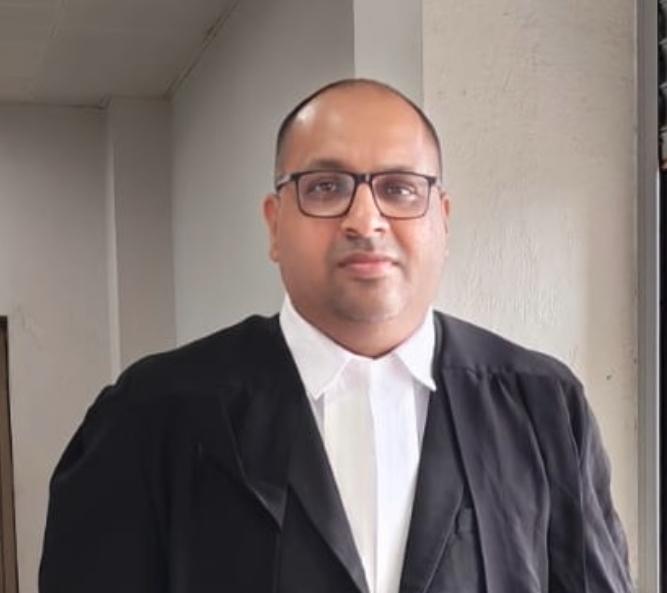
Disclaimer: This article is written by Advocate Vinayak D. Porob. It reflects his personal opinion and interpretation of the relevant provisions contained in the Bharatiya Nagarik Suraksha Sanhita, 2023, the Constitution of India, and the judgment of the Supreme Court in Vihaan Kumar v. State of Haryana.

