


By Rupesh Samant
Jaisalmer, Nov 4: In the heart of Rajasthan’s Thar Desert, just a short drive from the golden city of Jaisalmer, lies Sam Desert — a shimmering expanse of sand dunes where the local community has transformed what was once seen as a disadvantage into a thriving model of sustainable, homegrown tourism.
As the evening sun dips behind the dunes and the moon begins its quiet ascent, hundreds of visitors gather to witness a sight unique to this part of India — the sunset and moonrise happening almost simultaneously, painting the desert in hues of gold and silver. The spectacle, coupled with the warm hospitality of the Marwari community, makes Sam Desert a must-visit for travellers seeking authenticity.
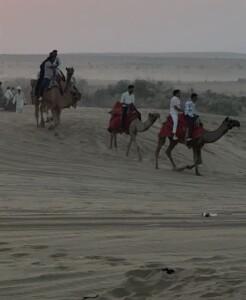
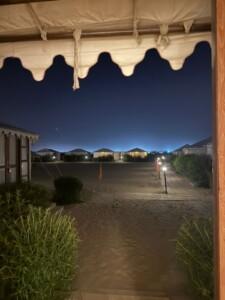
What makes this desert tourism remarkable is not just its scenery but its ownership. Unlike many popular tourist destinations where outside investors dominate, Sam is run entirely by locals. From the camel safaris to the four-wheel drives that slice across the dunes, from the tented camps to the traditional Rajasthani meals served under the stars — every element of the experience is managed by families from nearby villages.
“Everything here is local,” says Faizan Shaikh, a jeep driver who has spent over a decade ferrying tourists through the sand dunes. “There’s no outsider in this business. It’s our land, our work, and our pride.”
Faizan smiles as he explains the peculiar challenges of life in the desert. “You can get petrol easily here; there’s a pump nearby,” he laughs, “but for water, you must drive 40 kilometres.” Despite the scarcity, the locals have ensured that tourists never feel deprived — fresh meals, clean camps, and warm smiles make the harsh landscape feel like home.
Interestingly, liquor is not a part of the desert experience. The policy, enforced collectively by locals, helps maintain a serene and safe environment. Tourists are free to unwind in their tents, but rowdiness or public intoxication is discouraged. The result — a destination where culture, peace, and community coexist effortlessly.
The success of Sam Desert offers a stark contrast — and a lesson — to Goa’s tourism model, often criticised for its overdependence on external investors, rising commercialisation, and disregard for local voices. While Goa’s beaches attract millions, many locals feel sidelined as outside entities dominate the business of leisure.
In Sam, however, the complete localisation of tourism has brought prosperity to people who once depended solely on cattle rearing and agriculture. The community-driven approach ensures that revenue circulates within the villages, empowering families and preserving cultural identity.
Each night, as folk musicians perform under the starlit sky and tourists sway to the rhythm of desert songs, Sam Desert stands as a reminder — tourism doesn’t need glittering resorts or loud parties to succeed. It thrives when it grows from within, when it respects the land, and when it uplifts the people who call it home.
Perhaps, in this quiet desert, Goa’s bustling coastline can find a whisper of wisdom — that the soul of tourism lies not in luxury, but in belonging.

