

Panaji: The stakeholders of the state government’s ambitious Deposit Refund Scheme (DRS) have written to Chief Minister Pramod Sawant expressing their opposition to the implementation of this initiative.
The All Goa FMCG and Telecom Distributors Association (AGFTDA) has said that the scheme, in its present form, will have far-reaching adverse consequences for the people of Goa, tourists, as well as retailers, FMCG distributors, and manufacturers operating in the state.
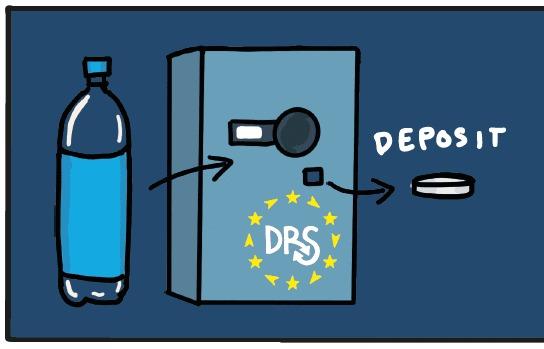
The Goa government has notified the DRS, which is to be implemented through a private company. Under the scheme, there is a provision for a refund if a customer returns the bottle or empty packet.
AGFTDA General Secretary Chetan Kapdi said that they have written a letter to CM Sawant this week stating that, while they acknowledge that solid waste management is a genuine concern requiring effective solutions, they firmly believe that the proposed DRS will prove to be far more damaging than the problem it seeks to address.
Kapdi said that other stakeholders, including the Goa Chamber of Commerce and Industry (GCCI), Goa Waste Management Association, Goa State Industries Association, and others, have also raised their opposition to the scheme on different platforms.
He said that consumers will have to pay an additional price on the commodities purchased, which can later be redeemed after returning the bottle or empty pack to the designated collection point in the surrounding area.
“Although described as a refundable deposit, in reality it requires consumers to pay DRS money upfront at the point of purchase and recover their own money only if they have the time, ability, and access to the collection centre,” he said.
The association has said that retailers will face frequent disputes with customers over DRS charges being levied over and above the printed MRP, leading to conflict, loss of goodwill, and increased stress on both parties.
Kapdi said that, as far as distributors are concerned, they will be required to pay DRS amounts upfront to the manufacturers or companies at the time of purchase, leading to increased capital requirements with no corresponding return.
He said that manufacturers will have to deposit the DRS amount with the Goa government, adding to the financial strain, especially when credit is extended to distributors.
“Additional costs will also be incurred for printing, managing, and affixing QR codes specific to Goa,” he said.
Meanwhile, Dr Anthony de Sa, who heads the DRS Scheme Administrator Committee, stated that the DRS scheme was shaped to include waste that does not get collected when discarded because of its low resale value, such as multi-layered plastic (MLP). “While a significant amount of waste is being managed, especially materials with clear monetary value such as PET bottles and beer bottles, low-value waste such as chips and chocolate wrappers and juice cartons is largely left behind. These materials are difficult to collect, costly to transport, and generate little revenue, yet they are disastrous for the environment,” he said.
Explaining the approach, de Sa said that it is important to have a comprehensive approach in which high-value as well as low-value waste is collected and internal cross-subsidies are leveraged.
“The objective is to incentivise return at source, not to deal with the material after it enters drains, beaches, or public areas,” he said, adding that the DRS, while incentivising waste collectors, is also aiming to drive social behavioural change towards waste disposal by consumers and packaging practices by manufacturers.

