

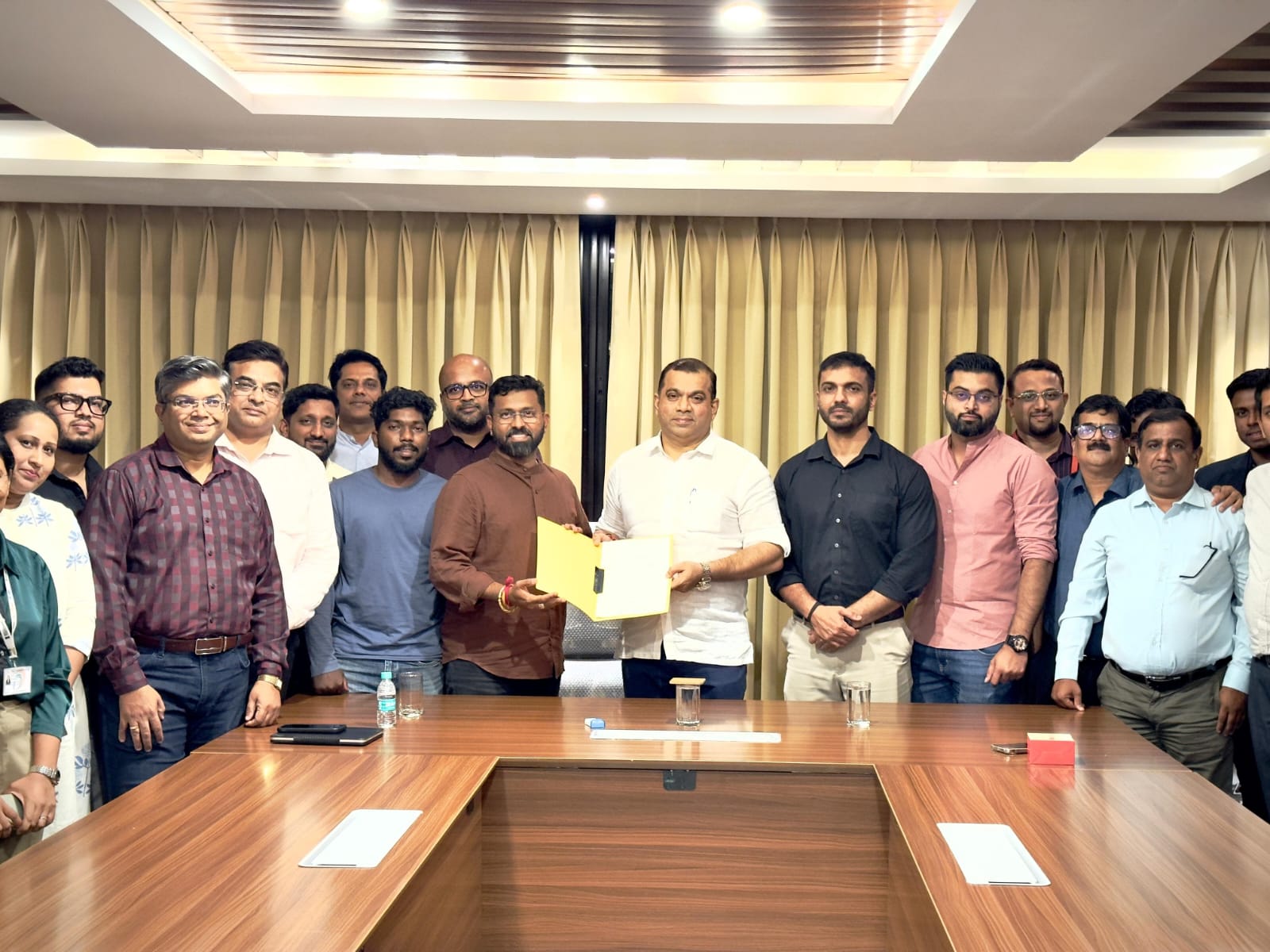
Panaji, April 7, 2026: Goa is progressing steadily towards finalising its Artificial Intelligence (AI) Policy, with the draft being further refined based on stakeholder consultations. On Tuesday, the Department of Information Technology, Electronics & Communications (DITE&C), along with representatives from the Goa Technology Association (GTA), deliberated on the revised draft during a meeting held at Paryatan Bhavan, Panaji.
The meeting was chaired by Kabir Shirgaonkar, Director, DITE&C, in the presence of Dr. Milind Sakhardande, Joint Director, DITE&C, D.S. Prashant, CEO, Startup & IT Promotion Cell, Dr. Kavita Asnani, Associate Professor, State Higher Education Council (DHE), Mangirish Salelkar, President, GTA, and other members of GTA. During the meeting, the revised draft policy was presented with a detailed overview of its objectives, key pillars, and sectoral applications.
Members of GTA also interacted with Minister for Information Technology, Electronics & Communications, Rohan Khaunte, to summarise the discussion and presented a copy of their inputs. The Minister engaged with the members, took feedback, and inquired about startups working in AI to understand the challenges faced by them. He also emphasised the need to incorporate these requirements into the policy framework to address the concerns of existing startups and ensure more effective implementation.
At the previous Budgetary Session, Minister for Information Technology, Electronics & Communications, Rohan Khaunte, indicated that the policy is expected to be finalised within 100 days. The state has since been fast-tracking efforts to shape an inclusive, ethical, and impact-driven AI roadmap.
The Department of Information Technology, Electronics & Communications initiated the process with a high-level stakeholder meeting in March, where the initial draft of the policy was circulated for feedback. A total of 57 suggestions were received from stakeholders and incorporated into the draft. These inputs were gathered from industry bodies and institutions, including GTA, ASSOCHAM (Goa), GEL, GCCI, the Education Department, and IndiaAI.
The recommendations broadly focused on accelerating AI adoption through strategic partnerships, ensuring time-bound implementation, enhancing citizen-centric service delivery, strengthening AI education and skilling through curriculum alignment, and sector-specific applications relevant to Goa.
Spearheaded by Minister Rohan Khaunte, the Goa AI Mission 2027 is driving the state’s AI vision through a range of focused initiatives. These include the AI for Governance & Social Impact workshop, the rollout of an AI chatbot for citizen services, and the launch of the Goa AI Hackathon.
The mission also places strong emphasis on education and skilling, with plans to introduce AI in schools and colleges, set up AI labs, and train teachers. Efforts to make AI more accessible include a partnership with Bhashini to develop a Konkani LLM. In addition, DITE&C is working on the AI Kosh project, an AI Readiness Index for departments, and plans to establish an AI Centre of Excellence in Goa.
As Goa charts its AI roadmap with a policy that is both meaningful and impactful, the Department of Information Technology, Electronics & Communications is taking into consideration the perspectives and needs of all stakeholders. Through this collaborative approach, Goa aims to build a forward-looking, inclusive, and implementation-driven AI ecosystem that delivers tangible outcomes across governance, education, and industry.

