

By: Adv. Baggio P. Monteiro
The dress code for advocates in India is a long-standing symbol of dignity, discipline, and the solemnity of the legal profession. In 2025, the prescribed attire continues to be governed by the Bar Council of India Rules framed under the Advocates Act, 1961. These rules ensure uniformity, maintain decorum in the courtroom, and help distinguish legal practitioners from the general public.
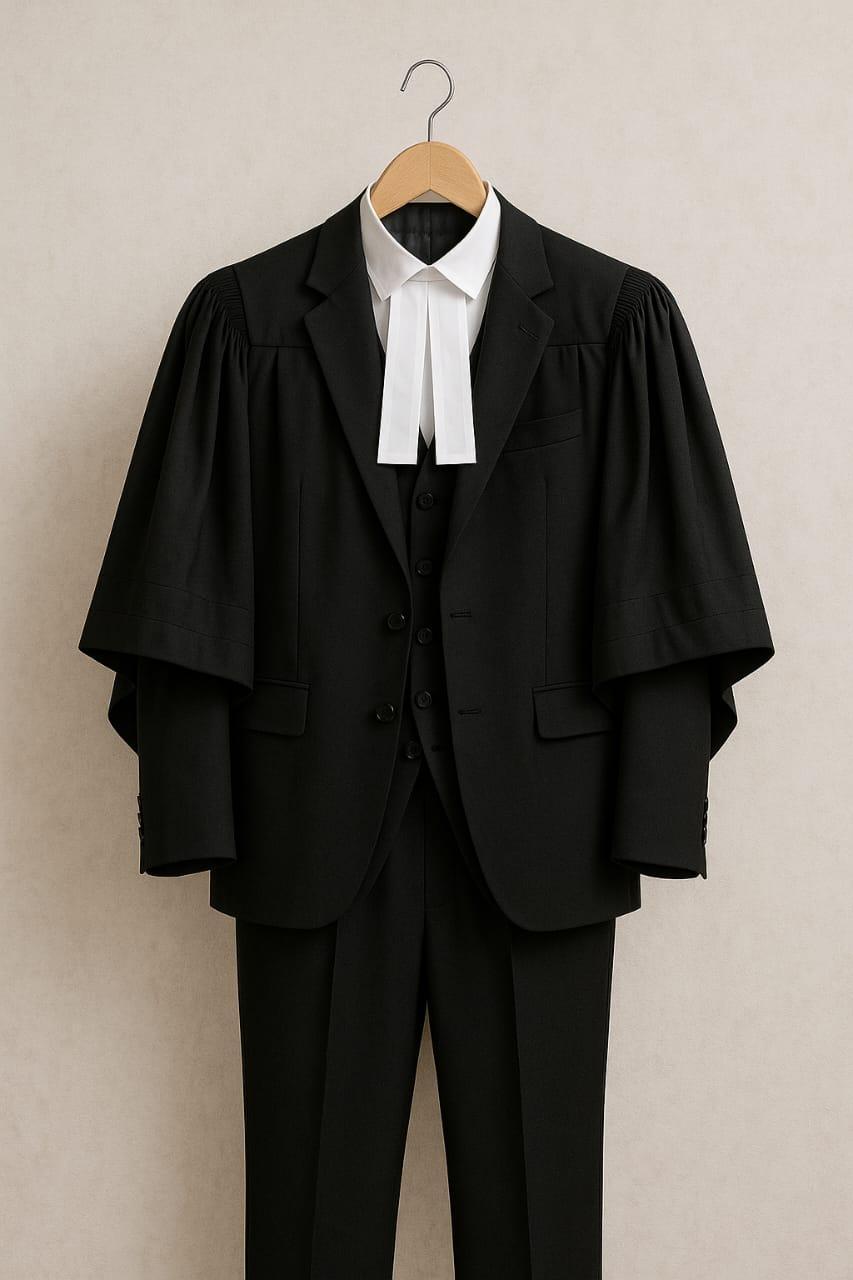
The standard requirement for all advocates remains the classic combination of black and white. Every practicing lawyer must appear in court wearing a white shirt or blouse, paired with a black coat and the mandatory white neckband. This attire not only signifies the formal character of court proceedings but also represents an advocate’s commitment to fairness, clarity, and justice.
For male advocates, the dress code consists of a white shirt with a stiff or soft collar, black trousers, black coat, and the prescribed neckband. Traditional alternatives such as a black buttoned-up coat, sherwani, or achkan are also permitted. The trousers are expected to be black, though white, grey, or striped variants may be allowed in certain settings. Formal black shoes complete the outfit, reinforcing the professional appearance required inside a courtroom.
For female advocates, the dress code offers slightly more flexibility while maintaining the same formal standards. Women may wear a white blouse or shirt, either with or without a collar, along with a black coat and neckband. They may pair this with black trousers or a long formal skirt. A white saree with a black coat and neckband also remains a widely accepted traditional option. Some female advocates may choose salwar-kameez or similar regional attire, provided the colors remain sober and the mandatory coat and neckband are worn.
In many higher courts, especially High Courts and the Supreme Court, wearing a gown (robe) over the black coat is customary, particularly for senior advocates. The gown adds to the solemnity of proceedings and reflects the hierarchical traditions of the legal system.
Beyond its formal requirements, the advocate’s uniform carries deep symbolic value. It conveys respect for the court, portrays sincerity towards the profession, and reflects the advocate’s dedication to upholding justice. The uniform ensures that every lawyer, regardless of personal background, stands equal before the court, reinforcing the principles of neutrality and professionalism that the legal fraternity represents.
Law students and interns who accompany advocates to court are generally expected to dress formally in white shirts and black trousers or skirts, without wearing the advocate’s black coat or neckband. This distinction helps maintain clarity regarding who is authorized to appear and address the court, while still instilling a sense of discipline and decorum among those in training.
Equally important is the ethical foundation attached to this attire. Advocates are strictly prohibited from indulging in any illegal or unethical activities. They are duty-bound to remain honest, transparent, and loyal to their clients at all times. The uniform they wear is not merely clothing—it is a constant reminder of their responsibility to uphold the rule of law, maintain the integrity of the profession, and serve their clients with utmost sincerity and truthfulness.
In essence, the advocate’s dress code in India is far more than a rule of clothing. It is a reminder of the heritage of the profession, the standards it upholds, and the respect society attaches to those who practice law. As of 2025, this uniform remains an essential mark of identity, integrity, and the honor associated with the legal profession.

